
 It is the beginning of July. Inside my house—borrowed from friends, a former bakery on the outskirts of Porto, where I evacuated from central Portugal to escape the heat (rather unsuccessfully, I must admit)—the sweltering air pours through every possible crack in the leaky doors and windows. I cannot remember such a heatwave in the north of the country for a long time—a country I have had the privilege of “occupying” for almost ten years now. Usually, the Atlantic brings a crisp, refreshing breeze here, but not this time. This year, Porto is slowly simmering in the stagnant air and the lingering memory of the smell of June’s São João sardines.
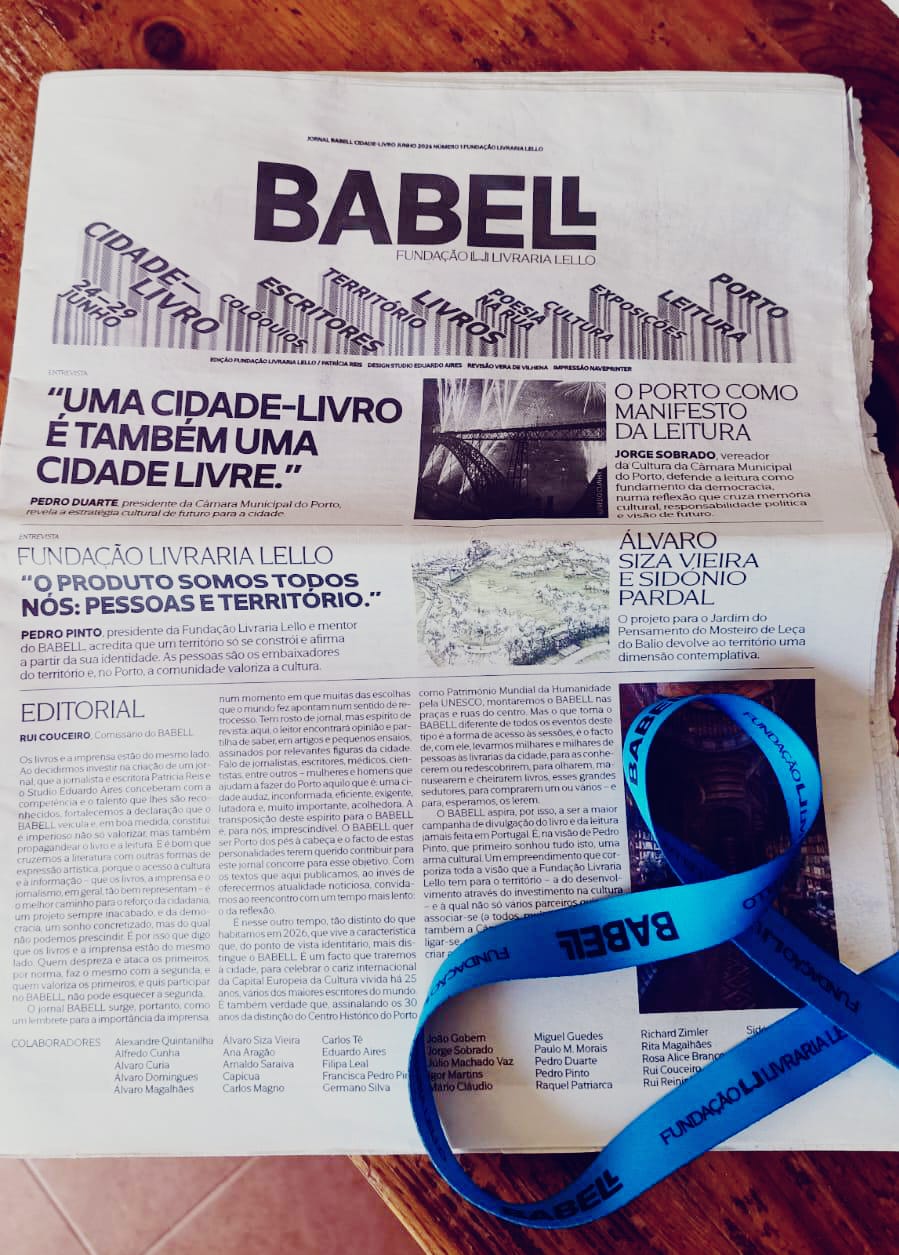
However, the city is burning hot for another reason as well—the fantastic Babell literary festival wrapped up here just a few days ago.
Porto, a Book-City
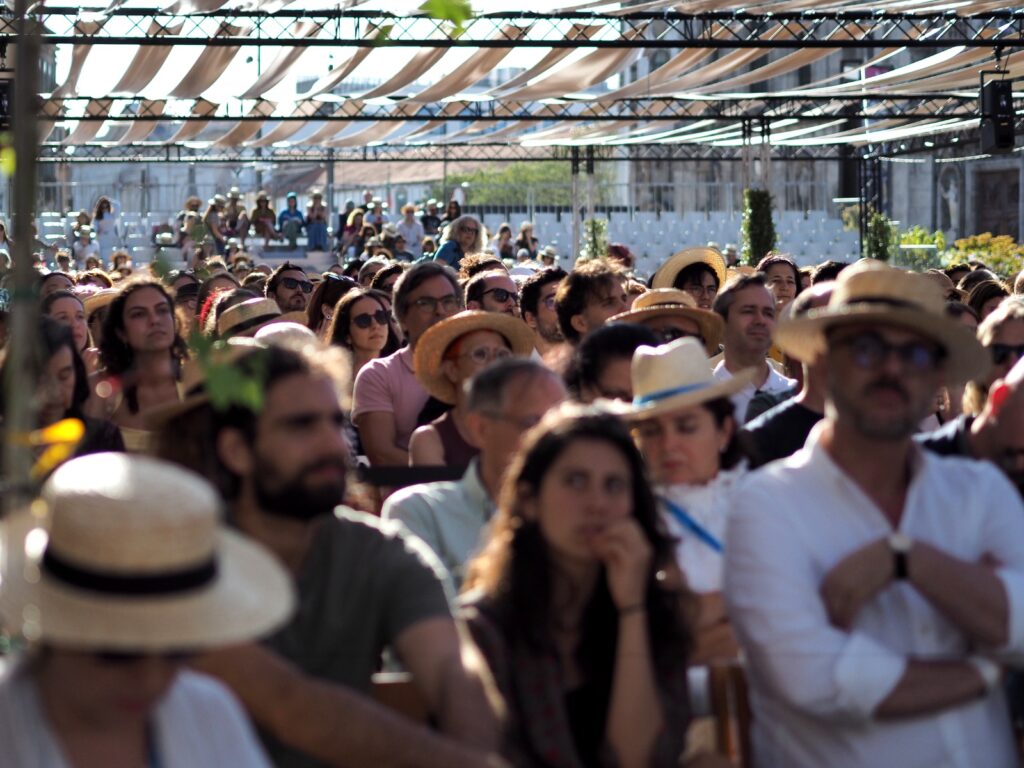
The inaugural edition of this literary festival, monumental in so many dimensions, set out to transform Porto, for a few days, into a conceptual Book-City. Events took place primarily in public spaces—on squares, streets, in parks, and even from windows and balconies.
This massive undertaking began with a collaboration with Livraria Lello Foundation and family of Pedro Pinto, the owners of the iconic Livraria Lello, which was celebrating its 120th anniversary. The first great success of Babell, as its curator and organizer Rui Couceiro emphasized during a meeting with foreign journalists, was what they managed to achieve right from the start:
“We managed to attract not one or two big names, but close to ten absolute top-tier stars. What’s more, the Babell festival gathered probably the most outstanding contemporary authors writing in the Portuguese language.”
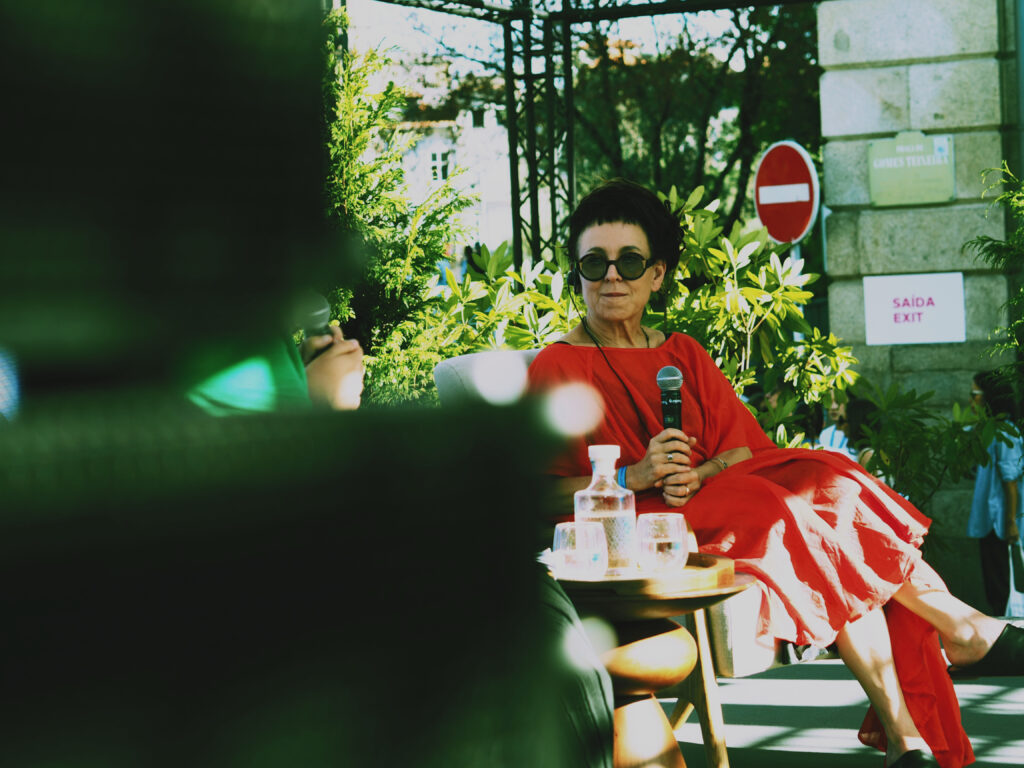
Among those global stars were Margaret Atwood, László Krasznahorkai, Salman Rushdie, Julian Barnes, and Olga Tokarczuk. As for Portuguese and, more broadly, Lusophone writers, the audience had the opportunity to meet, among others, Valter Hugo Mãe (in Poland, we only know his Apocalypse of Workers), Gonçalo M. Tavares (author of my personal favorite,The Neighborhood), Lídia Jorge (author of translated to Polish The Memorables), and Conceição Evaristo, who is still waiting for her first Polish translations.
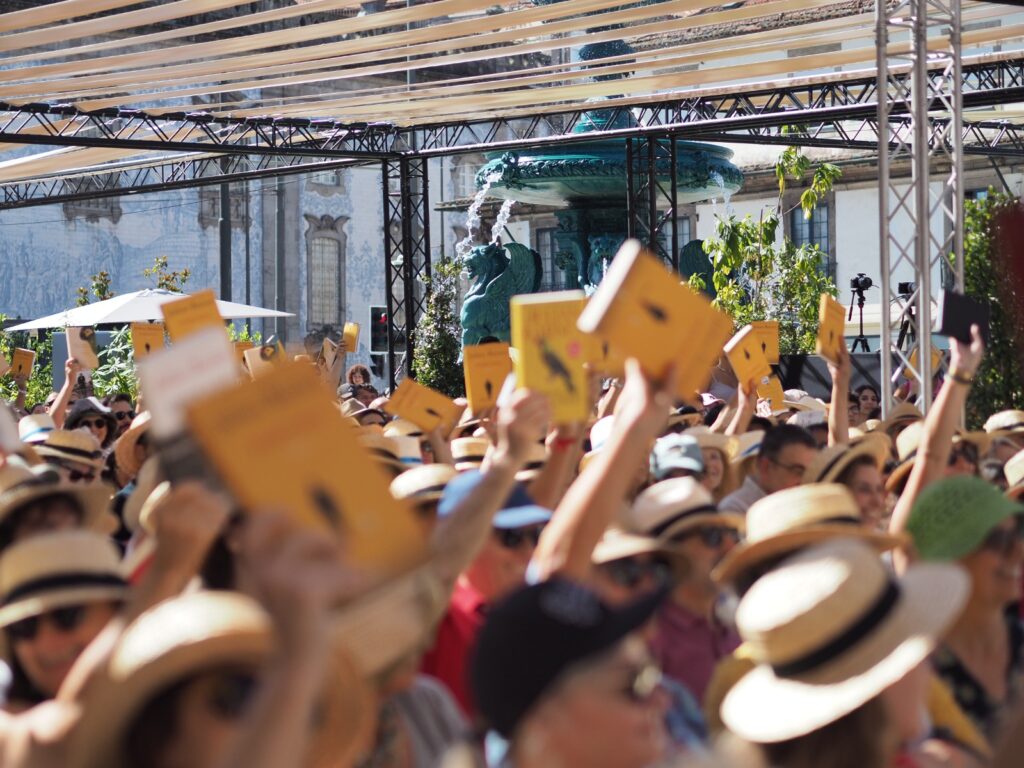
“If you look closely, something extraordinary is happening here,” Rui Couceiro shared. “Every single meeting at Praça dos Leões gathers well over a thousand people—and there are no exceptions. It was like this yesterday, it is like this today, and exactly the same awaits us tomorrow. Every single discussion regularly attracts over a thousand people here.”
The festival curator added that many events were completely sold out, forcing them to announce extra seats so no one would be left behind. It came as no surprise, then, that for the meeting with Salman Rushdie—which took place at the Coliseu do Porto for security reasons—a staggering 3,000 book-tickets were distributed.
The concept of a Book-City is rooted in the vision of making physical paper books a real currency. The idea was originally used at Lello bookshop, where you pay for entry by buying a book. Here, however, it was about something more: giving literature – perhaps with a touch of pop culture – a certain value, and encouraging people, especially young people, to step inside the bookshop.
“This is a fight,” Couceiro explained bluntly. “That is why we created a system where the ticket to the events is a book, which forces people to visit bookstores. More than 70% of young Portuguese people have never set foot in a bookstore. So, when we organize a concert on Avenida dos Aliados featuring an artist like Bárbara Bandeira,who is a youth artist,we do it precisely so that these young people go to a bookstore to get their ‘book-ticket’. That was our main goal. I believe that this ticketing system, where all local bookstores turn into our massive festival box offices, is the greatest achievement and success of the Babell festival.”
After Babel in the Age of AI
One of the core principles of the festival was that every artist speaks in their mother tongue.
“At the very beginning, when I started inviting authors, many people kept telling me: ‘Oh, don’t invite this person because nobody understands their language. Let’s only invite those who speak Spanish or English.’ But I didn’t want that. The only thing that interests me is the quality criterion. Therefore, I only invited writers whom I truly admire and whom I consider to be exceptionally good,” the curator recounted.
The meetings were translated simultaneously by human interpreters with AI support, and transcribed live by the AI onto a massive screen behind the authors.
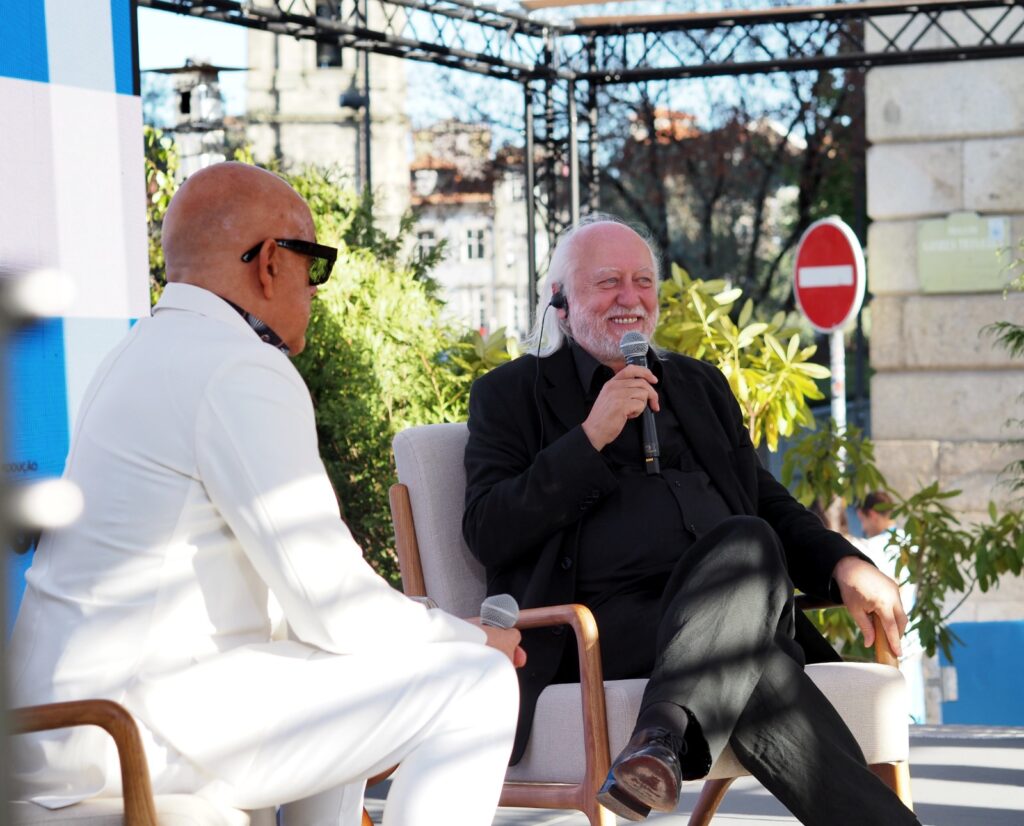
While the translation didn’t bother me during Olga Tokarczuk’s event (obviously), the meeting with László Krasznahorkai proved that although the concept is modern, right, and beautiful—I particularly love the idea of downgrading the lingua franca, i.e., that unbearable “Anglicization” of our reality—in practice, it’s not easy. In fact, Olga Tokarczuk herself publicly expressed doubts regarding this digital mediation, adding with smile that AI does not grasp context and metaphors, and she fully intends to use those on stage.
Not knowing Hungarian, I only understood a fraction of the discussion with one of my absolute favorite writers. Fortunately, László’s magnetic personality completely made up for these shortcomings. The entire audience—mostly non-Hungarian speakers, after all—was instantly captivated. They rewarded him with multiple enthusiastic ovations, for instance, after his suggestion that Donald Trump should be sent to the Moon as part of the Artemis program to ensure he never returns to Earth.
During the breaks, however, I talked to the attendees. Even the Portuguese admitted they found it difficult to follow the text, which constantly fluctuated on the screen. Words vanished and reappeared, the algorithm changed grammatical tenses on the fly, and staring continuously at this digital matrix simply induced a headache in one’s prefrontal cortex.
When I asked Rui Couceiro how he plans to resolve this technological glitch in the future, he answered:
“Every session features a human interpreter. It is the captioning that is done by artificial intelligence. Therefore, there is always a person doing the initial interpretation, and then the AI handles the captioning, because no human could type that fast.
What is the issue? The fact is that sometimes someone says ‘Rimbaud’ and the AI writes ‘Rambo.’ And that is ridiculous. Of course, I wish it weren’t that way. We try to improve the system as much as possible.”
Ideally, in future editions, we would like to email participants asking them to download a dedicated app and bring their own headphones so they can listen to the translation directly on their phones. We are working on implementing this solution for the coming years. Other options were rejected by the authors themselves. For example, consecutive translation completely breaks the dynamics of a conversation, doesn’t it? If I say something and then the translator interprets it, in the meantime, I’ll already forget what I was even talking about. You lose the rhythm and that intimate connection with the audience. There are no perfect solutions. We chose the current one in full agreement with the writers.”
Hitchhiking Through Geography
Since one of our magazine’s goals is to bring our two cultures closer together by showcasing artists unknown to the mainstream, for example writers untranslated into Polish and Portuguese, and building non-intrusive intercultural bridges, the Babell festival was right up our alley.
If only we all possessed the knowledge of some total language—much like in Jorge Luis Borges’ infinite The Library of Babel, where within the chaos of letters lies everything that has ever been or will ever be said in all the world’s tongues… Or if we, like the characters in The Hitchhiker’s Guide to the Galaxy, had the iconic Babelfish in our ear—a universal translator that instantly erases all borders… Perhaps then our countries would not feel so distant from each other, and Polish literature would not sound like a rustling, harsh cipher to the Portuguese—and vice versa.
“We don’t know the work from other countries because it simply doesn’t reach us,” Rui Couceiro commented during a press conference. “I am a writer myself—a Portuguese author creating in a peripheral language, even though it is one of the most widely used languages in the world. However, I am fully aware of how difficult it is to break through with your own literature into other countries, because usually, nobody knows it there and rarely do they have the space to follow it. I imagine exactly the same thing happens with Polish literature. And that is precisely why this festival builds bridges. Suddenly, we have an outstanding Polish author speaking to thousands of people, and readers, reaching for her books, realize: ‘Wow, brilliant things are being created in Poland.’ This happens with every new region. If we invite authors from other corners of the world in future editions, the exact same scenario will surely repeat itself.”
The Literary Virus
Although it is still too early for definitive, official figures — the organisers are already analysing the detailed data — the number of book tickets sold is approaching tens of thousands. Tens of thousands.
The idea of a physical book serving as a passport to the world of culture brought about something absolutely spectacular. The goal for the coming years remains clear: to infect the whole of Porto with a longing for a book.
Perhaps in a few years, there will be fewer mass tourists on these streets, coming to Porto merely to consume a pre-packaged, plastic illusion of Portugueseness, and more conscious travelers with a book tucked under their arm—people interested in something deeper than a tacky sardine magnet manufactured in China and sold in a souvenir shop.
I do not know if, with my innate Eastern European scepticism, I can truly believe that such a model will permanently alter the urban fabric of Porto and reading habits of its residents. Yet, the book sales statistics during the Babell festival speak for themselves. My only quiet, lingering question remains whether the festival participants will actually read all those acquired books.
All translations between Polish, English, and Portuguese are my own, with AI assistance. The interview transcription was automated. The texts have been proofread by native speakers of each language. If any errors or inaccuracies have slipped into the text at any stage despite our best efforts—we sincerely apologize and welcome your corrections; we will surely fix them!
The Editorial Team
Rui Couceiro (b. 1984) – a Portuguese writer, editor, and cultural journalist affiliated with the news magazine Visão. He is the author of the acclaimed, award-winning novel Baiôa sem Data Para Morrer (2022). In the spring of 2026, he published his latest book, A Mais Bela Maldição —a literary reportage exploring the transformative power of reading in the age of artificial intelligence. He served as the commissioner and chief creative mind behind the inaugural edition of the Babell festival in Porto. We are still eagerly awaiting his first Polish translation.
The Babell Literary Festival – A major international literary festival whose inaugural edition took place in June 2026 in Porto. The main organizer and patron of the event is the Livraria Lello Foundation (Fundação Livraria Lello), which launched the festival as part of the celebrations commemorating the 120th anniversary of the iconic bookstore. The project was realized in a strategic partnership with the Porto Municipal Council.