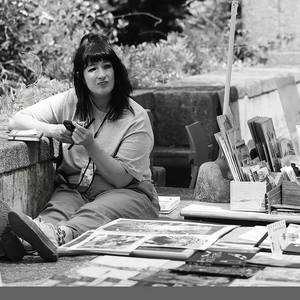
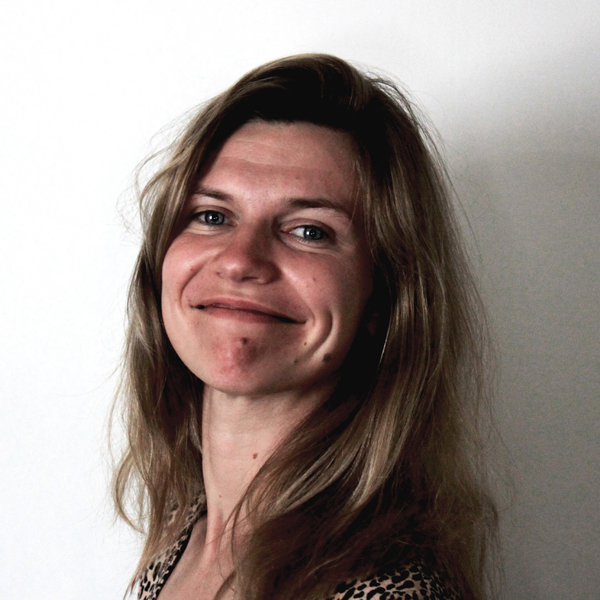
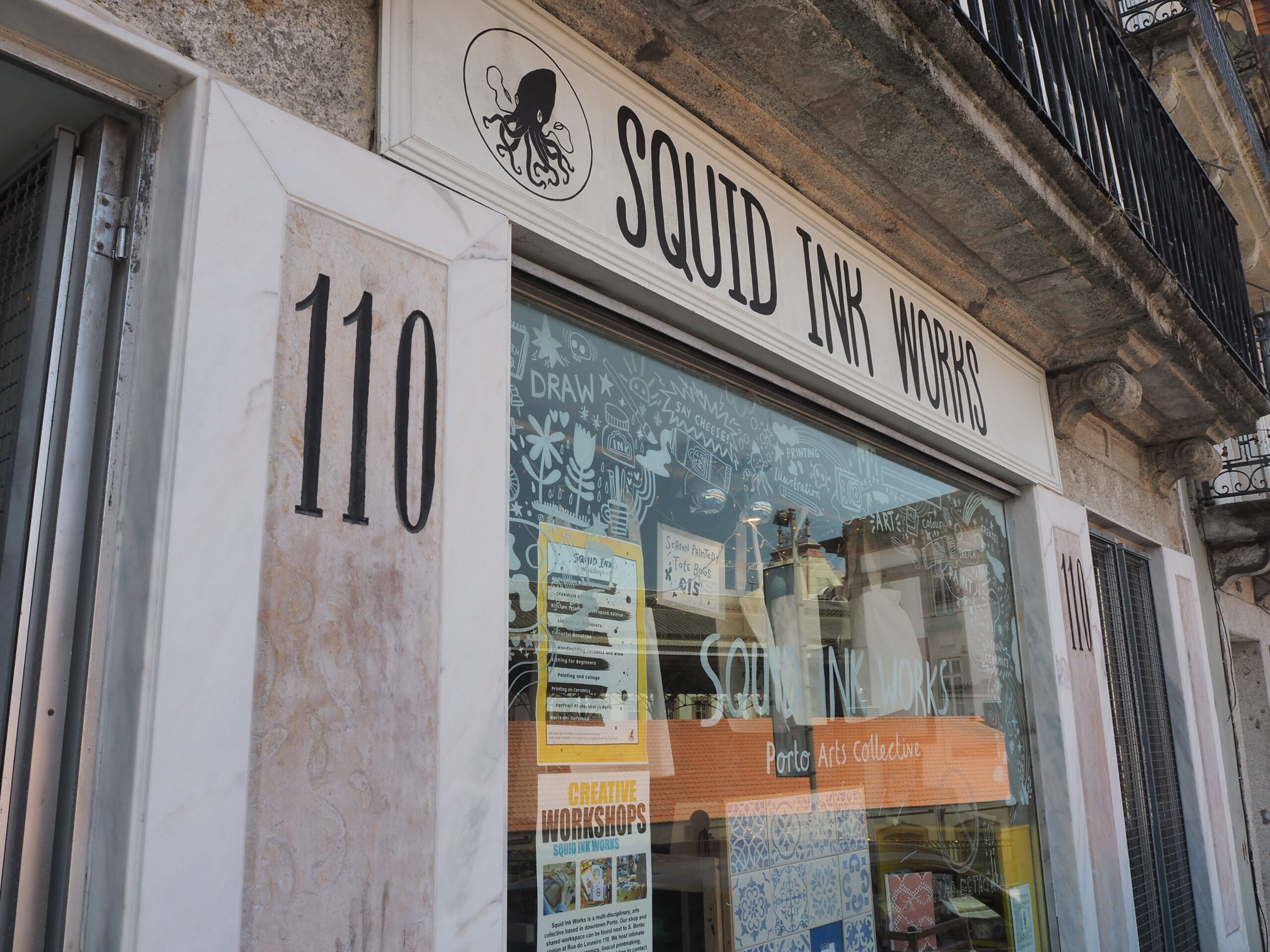
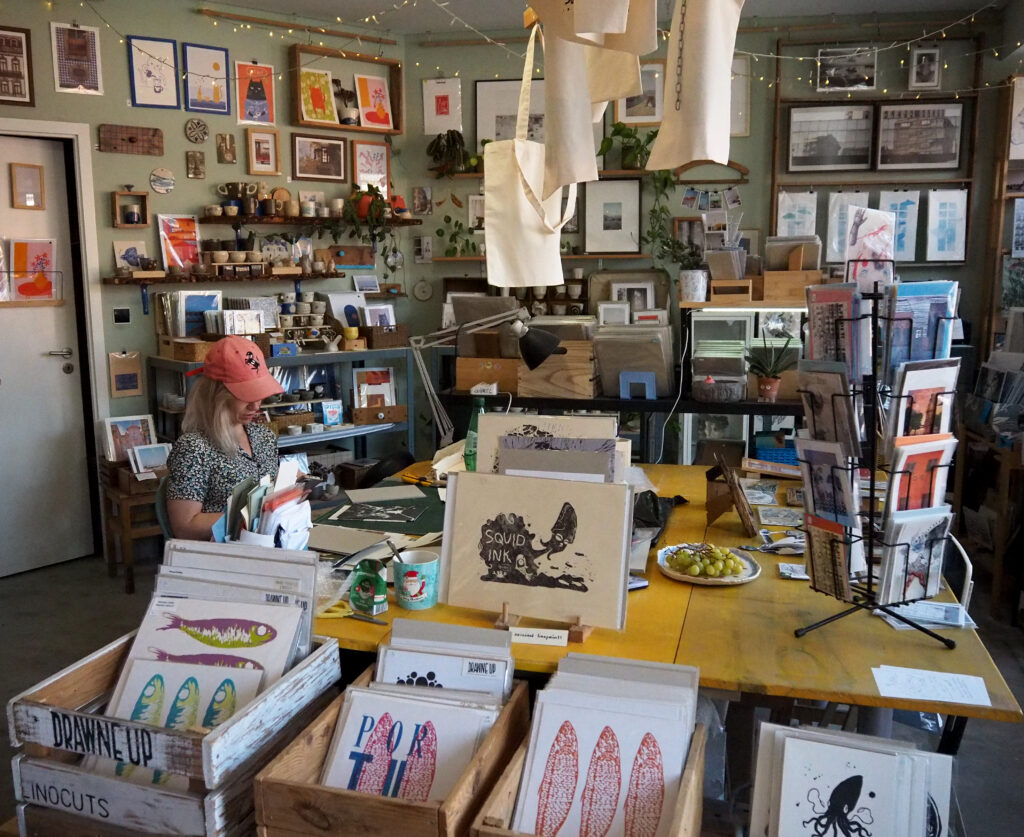
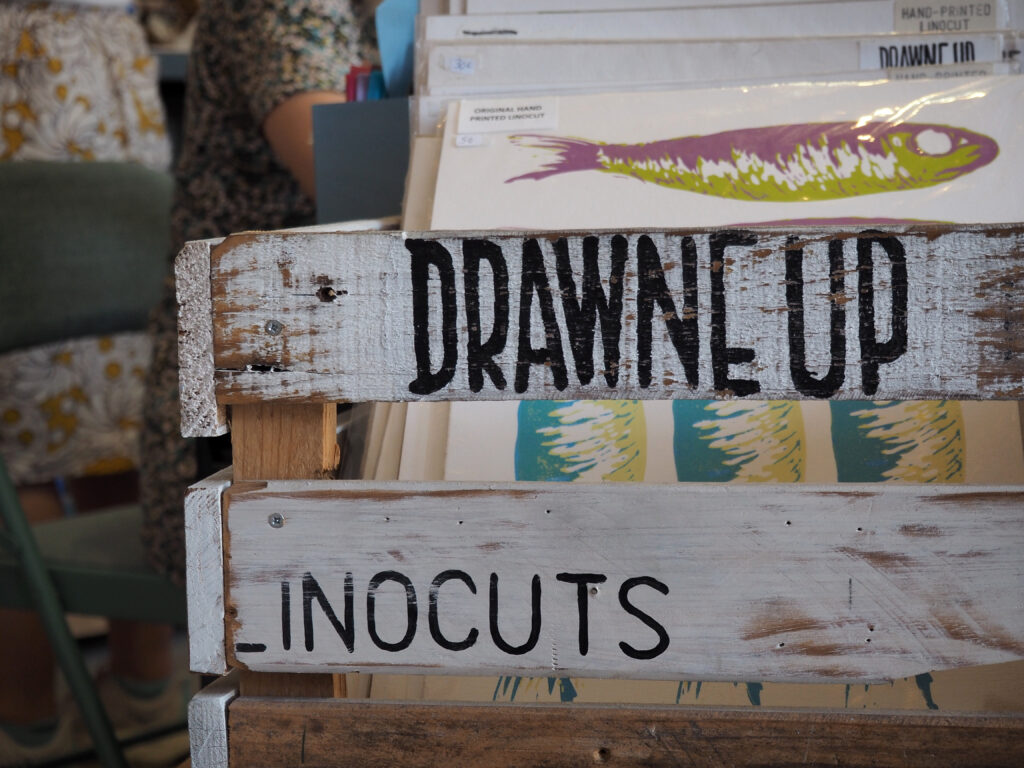
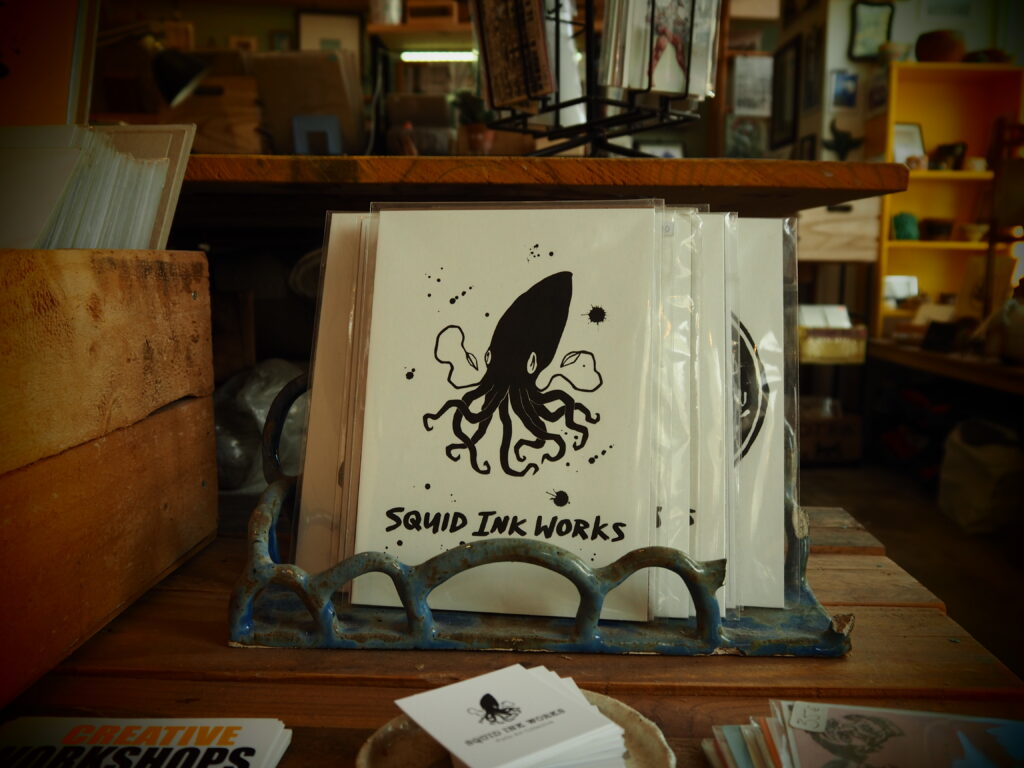
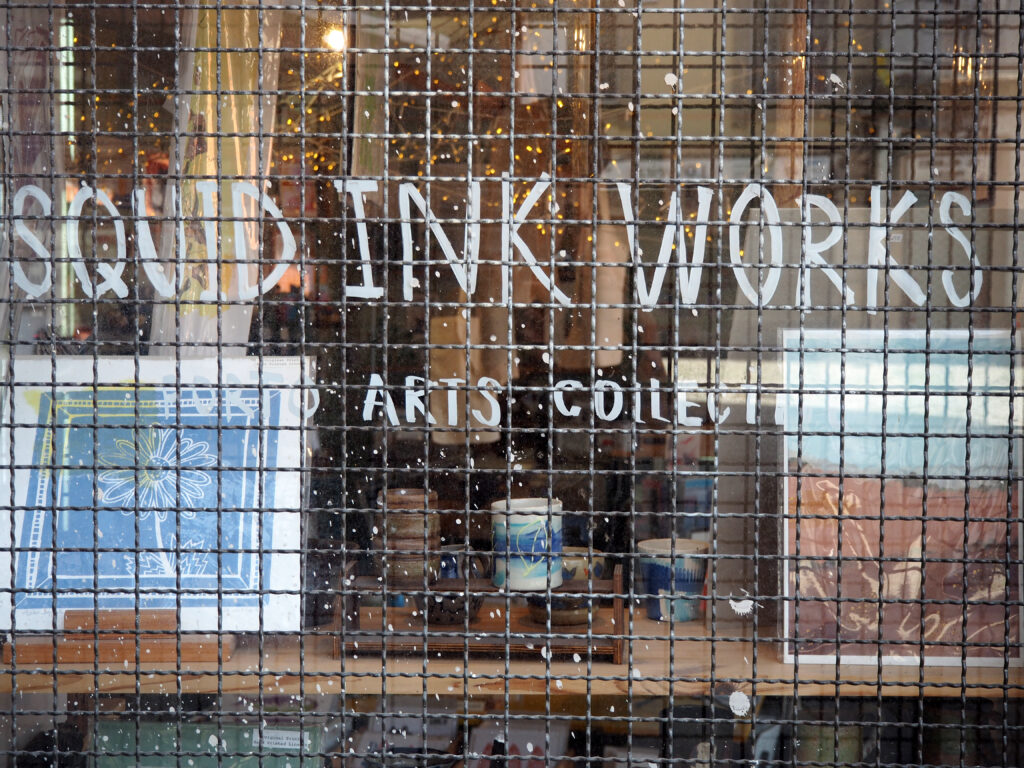
 We begin our new interview series on emigration here, in Porto, where Polish printmakers Marta Bełkot and Kasia Harciarek co-run the artist collective Squid Ink Works — a unique space blending a gallery, printmaking studio, and shop. We chat about their professional journeys, the everyday reality of being female artists, and carving out a space of their own on the map of Portugal.
Zuzanna Majer: I’d like to start with what might sound like a slightly dull question you hear all the time as an emigrant, but nobody really listens to the answer: where did Porto come from, and why did someone from so far away—after all, Poland and Portugal are over 3,000 km apart—decide to come to Porto of all places? What was the connecting link, and why did you decide to stay?
Marta Bełkot: Well, let me start: it had always been a big dream of ours to go on an Erasmus exchange. We studied printmaking together in Katowice and tried to go on a student exchange for about three or even four years. Our set destination was Spain because Kasia spoke Spanish. We kept applying—the first time Kasia got in and I didn’t; later there was no funding; the following year we both got in, but then another issue popped up…
Kasia Harciarek: Always something! (laughs)
MB: Exactly. In our final year, we were so resigned that we thought there was no point in even submitting documents, especially since it’s quite hard to go away at the end of a Master’s degree. But we made it. We wrote a cover letter straight from the heart, sprinkled it with perfume, cast a spell over it, and took a taxi to make it to the dean’s office by 5:00 PM, just as it was closing… And the lady at the desk said: “Girls, I knew you’d come to hand in your papers anyway, so I waited for you.”
Since it was our last chance, I told Kasia: “Kasia, you’re not choosing this time—it has to be Portugal. Portugal, end of story.” Ever since high school, I had felt that I wanted to go to Portugal, but I could never quite push the idea through. Back in art high school (we both attended the State High School of Fine Arts in Katowice, just in different year groups as Kasia is a year younger), a visiting student once gave a talk about her Erasmus in Portugal and how wonderful it was. That really inspired me.
And we did it! We left for Portugal and spent the first semester of 2014 studying printmaking and drawing at the Faculty of Fine Arts, University of Porto.
KH: Afterwards, back in Poland, we defended our Master’s diplomas, and in 2016 we returned to Porto. I landed a summer internship in the Printmaking workshop under Professor Graciela Machado.
MB: Kasia also had an extra reason to return because she had already met her boyfriend, Pedro, during Erasmus. (laughs)
What was your initial experience with the Portuguese language? How did you learn it, and when did you start feeling more a part of the country through the language, which is, after all, the direct link to reality? Portuguese isn’t super easy, but Kasia, you already knew Spanish, right?
KH: Yes, I knew Spanish, but to be honest, Portuguese was really tough at first. I thought I’d never learn it. When I started working as a waitress in a restaurant, I barely knew anything beyond basic words.
At first, I didn’t understand a thing, but looking back, I think that had its own charm. Not knowing the language wrapped everything in an aura of mystery. Just observing people’s faces, expressions, and gestures, I’d imagine what they were talking about. In my head, their conversations always seemed incredibly wise and fascinating (laughs). I really wanted to learn the language so I could finally understand everything, but reality turned out to be a bit disappointing once I actually mastered it (laughs).
MB: I had a similar experience. At the very beginning, I arranged the same internship as Kasia in the university’s Printmaking studio under Professor Graciela Machado, assisting during classes. It was very stressful because everyone spoke to me in Portuguese all the time.
The first year was extremely hard for me, very intense. In Portugal, you work 9-hour days, including 1 unpaid hour. Restaurants often use split shifts (horário repartido), where the break lasts about 4 hours, but then you work late into the night. You end up spending your whole life at work…
After finishing the internship, I looked for work in restaurants and bars, and I had some very bad experiences in certain places specifically because of my weak language skills.
Eventually, I started working at the university as a substitute teacher while continuing to work in a bar at night. I had no time for art or rest, but working with people really pushed my Portuguese forward. The real breakthrough, though, was moving in with a Portuguese girl, Sandra, who spoke to me exclusively in Portuguese.
I see—so you were both working full-time! How did you balance that with your artistic work? Did you have any time for it, or were you doing anything parallel related to your studies and passion?
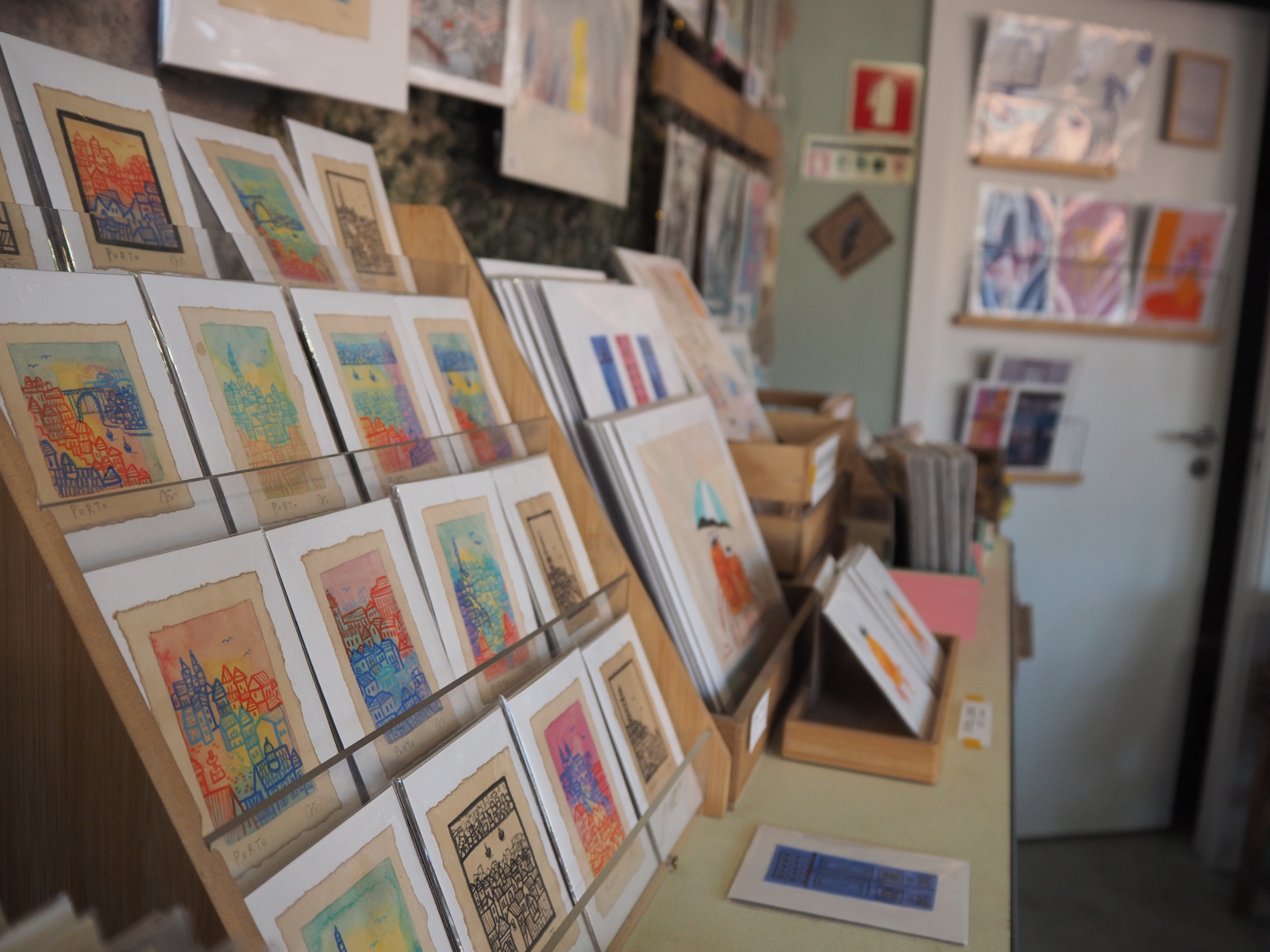
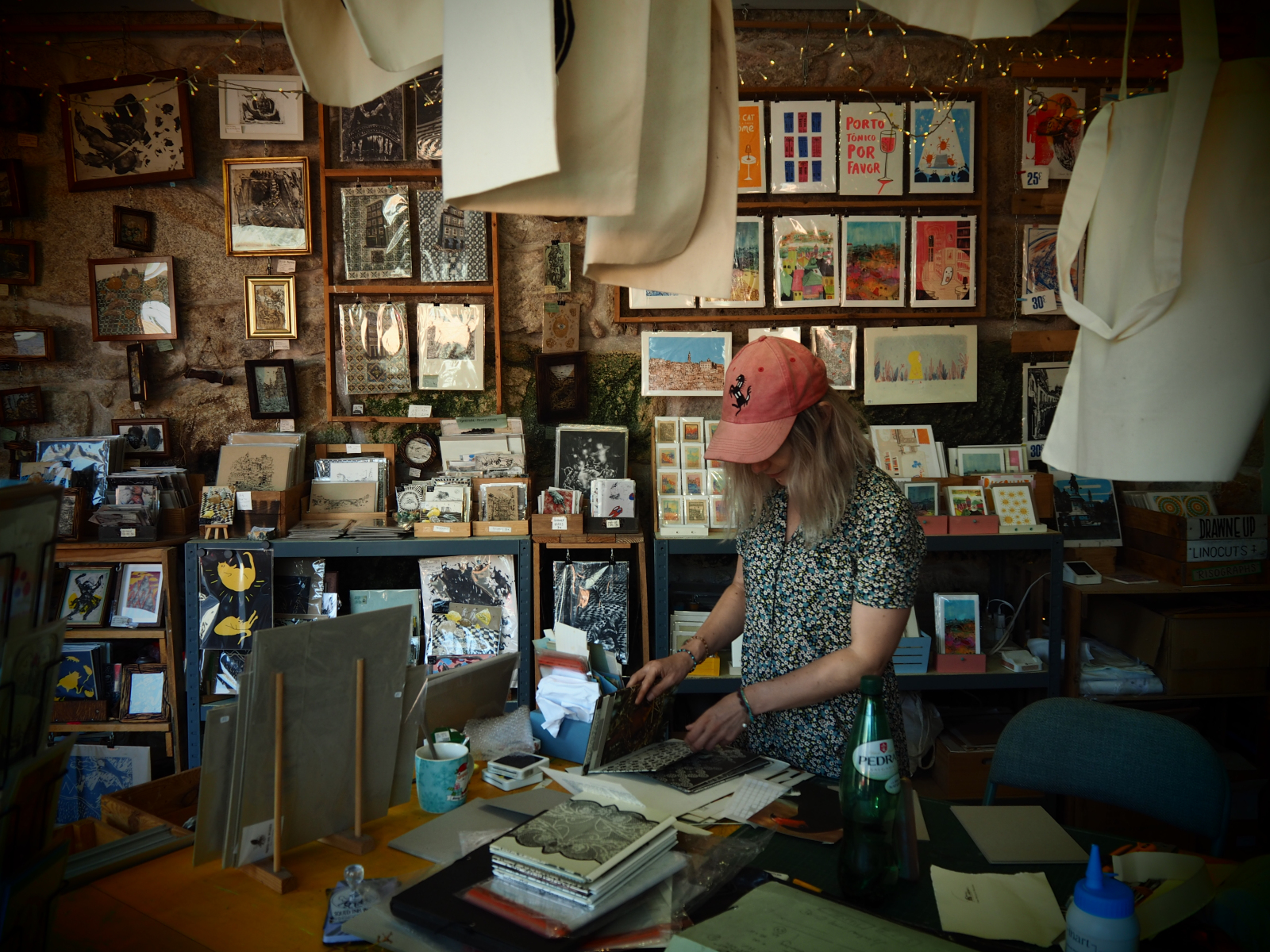
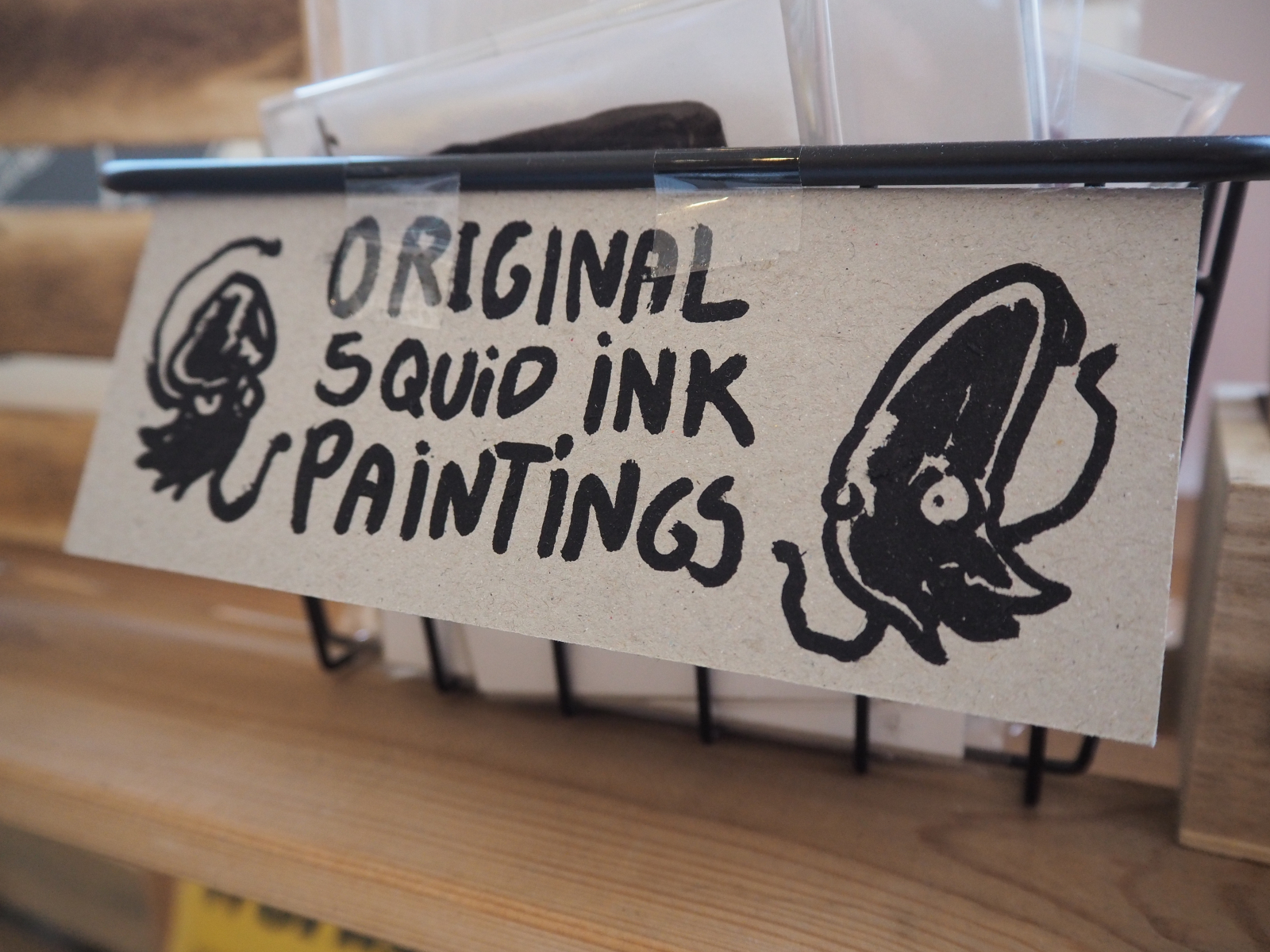
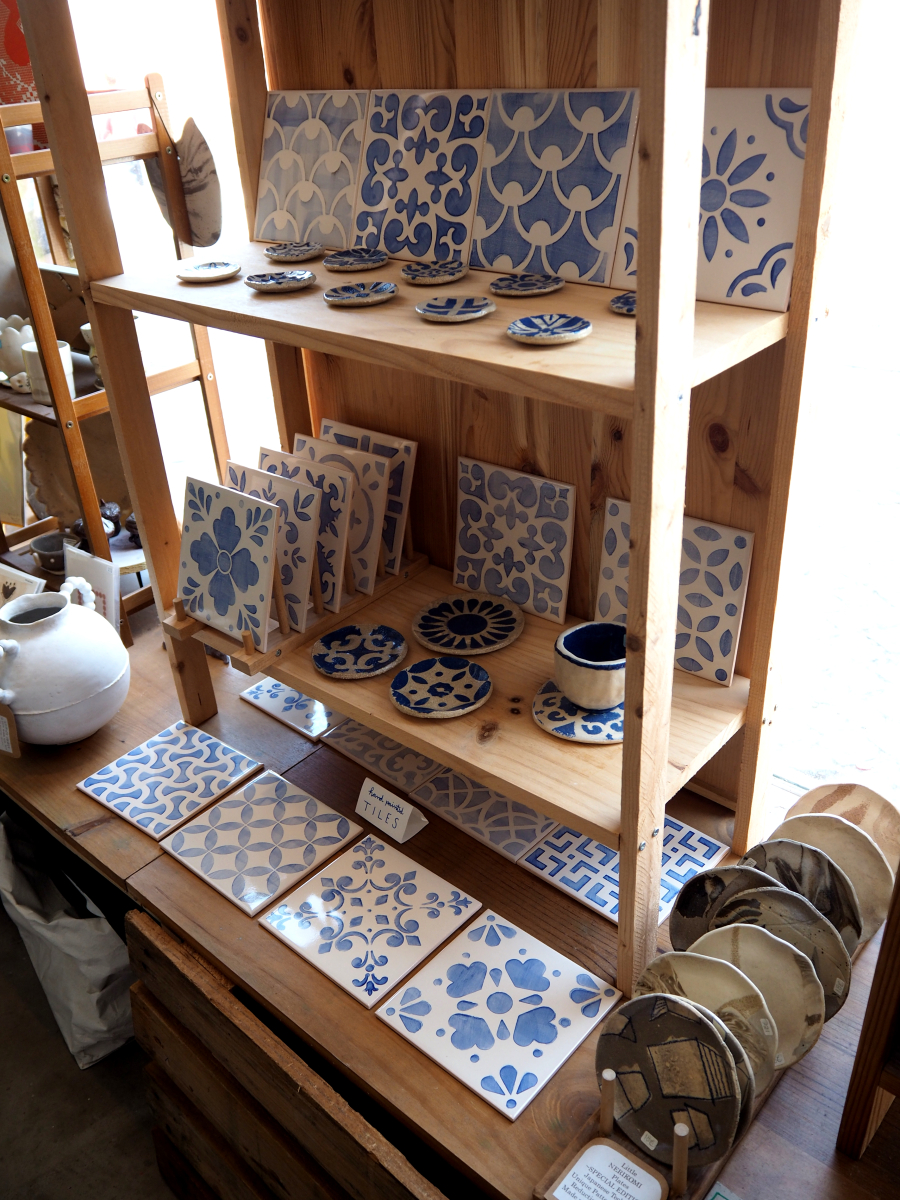
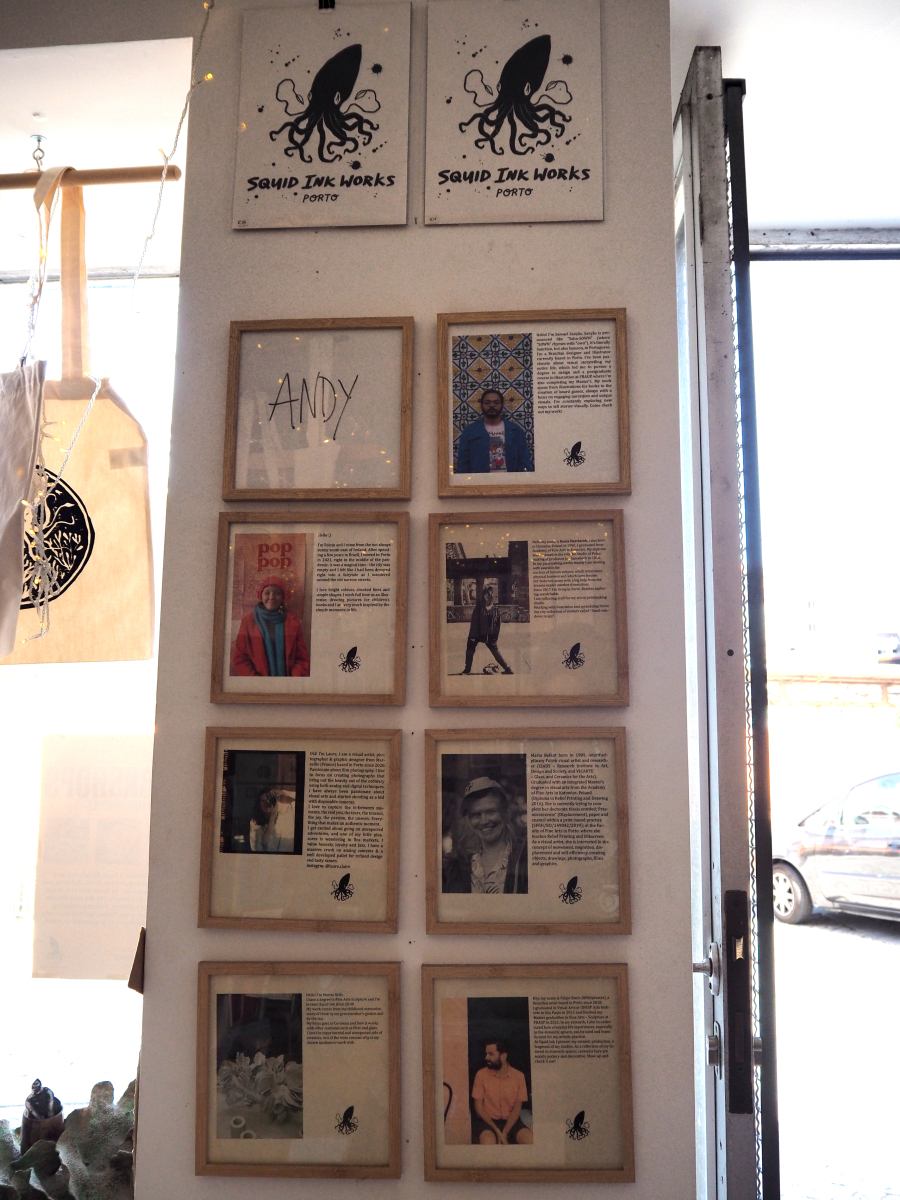
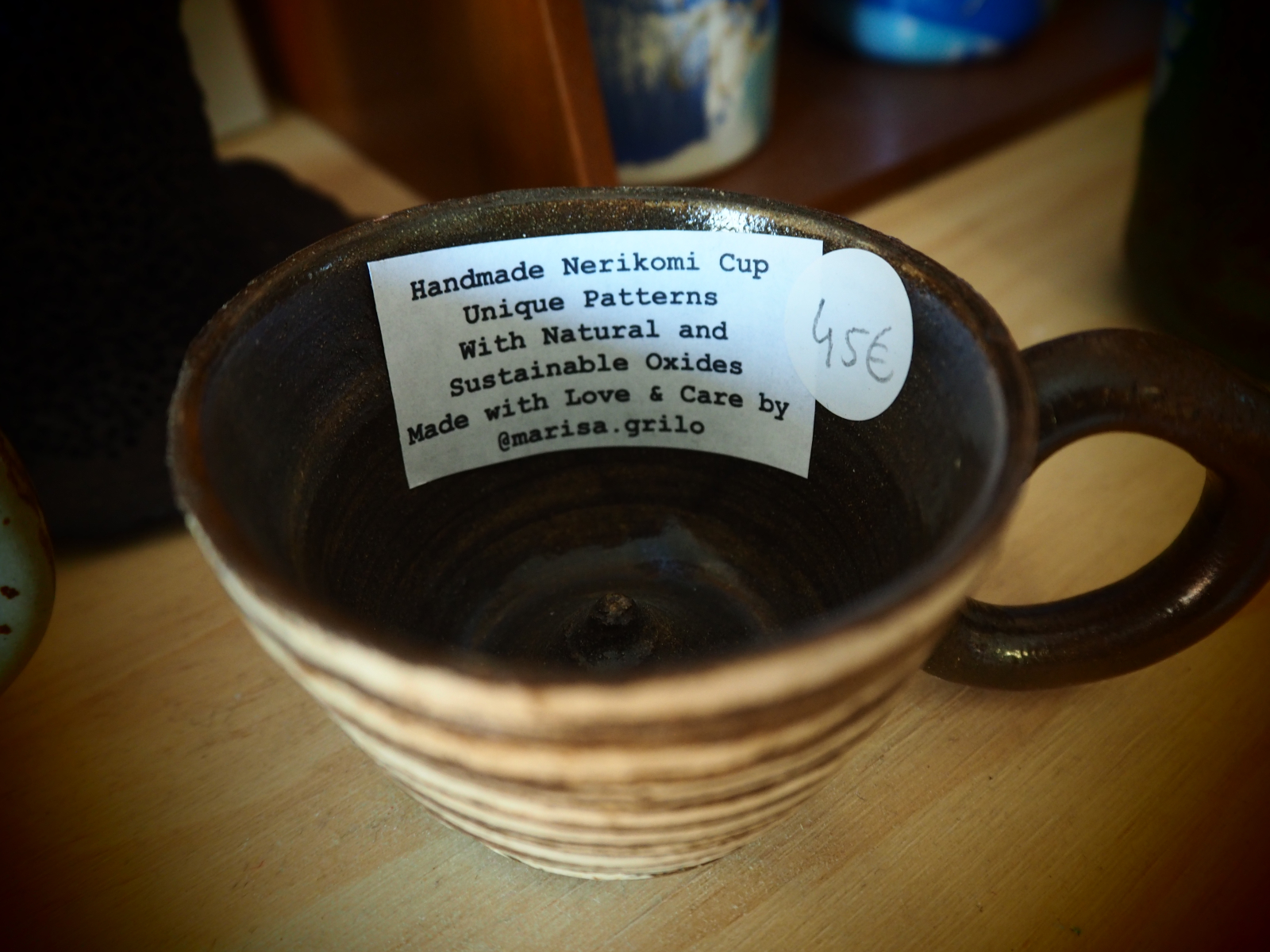
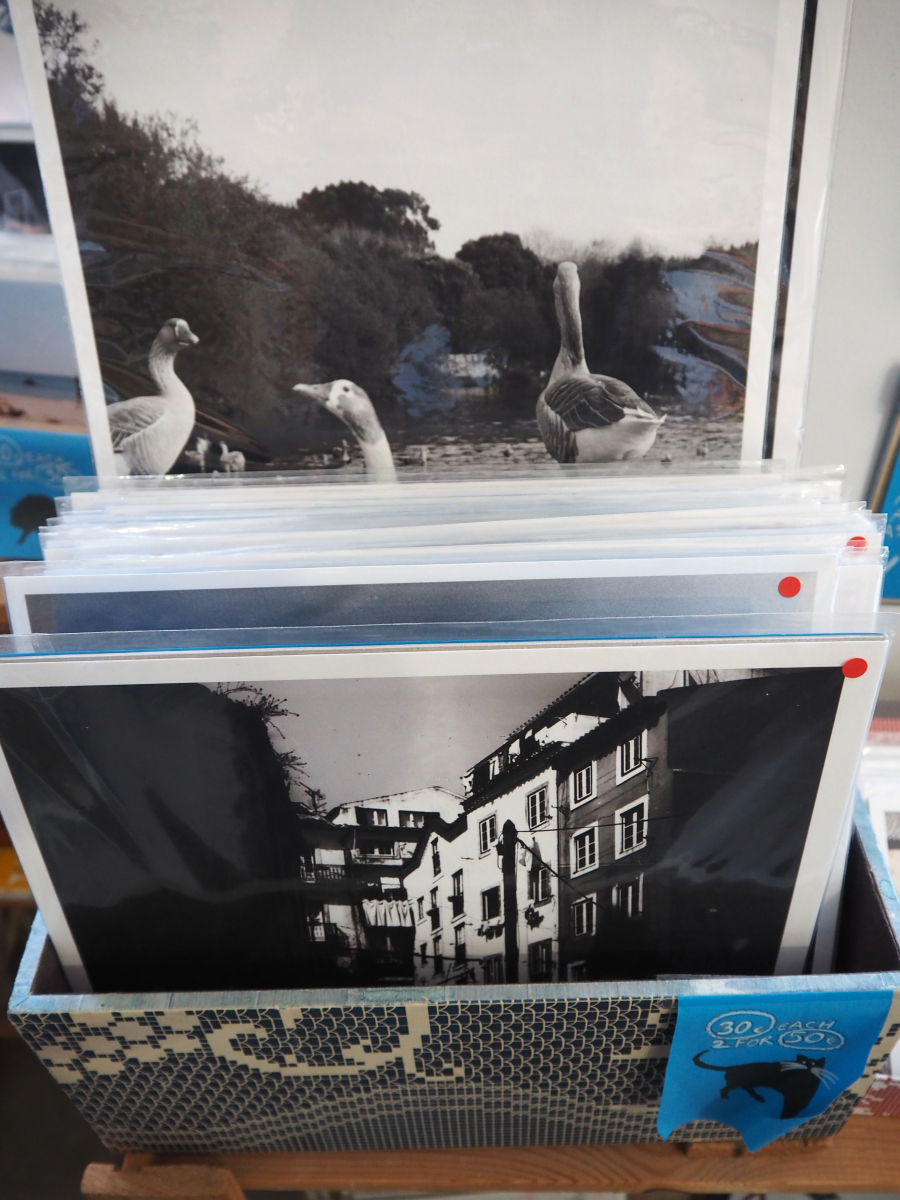
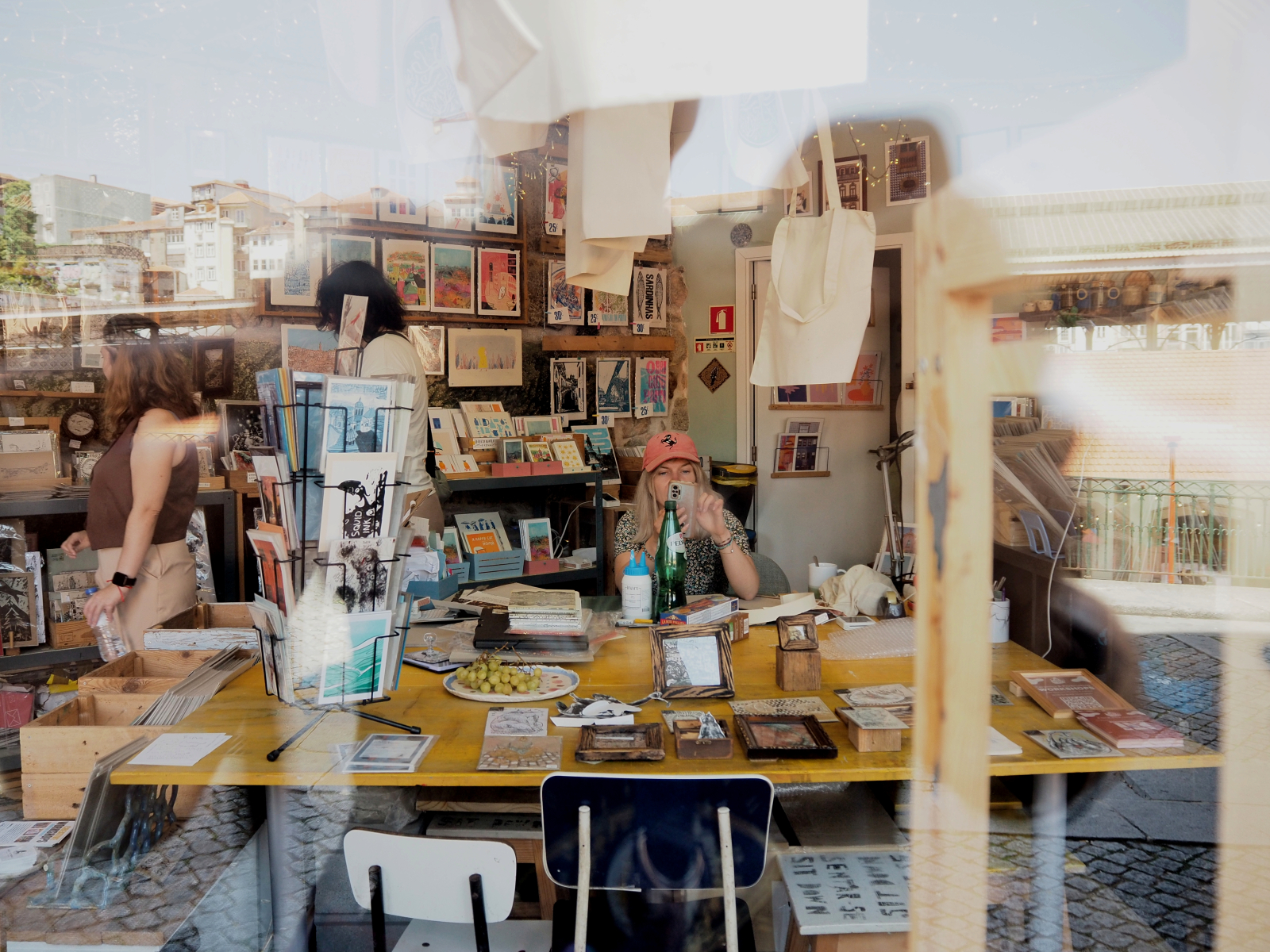
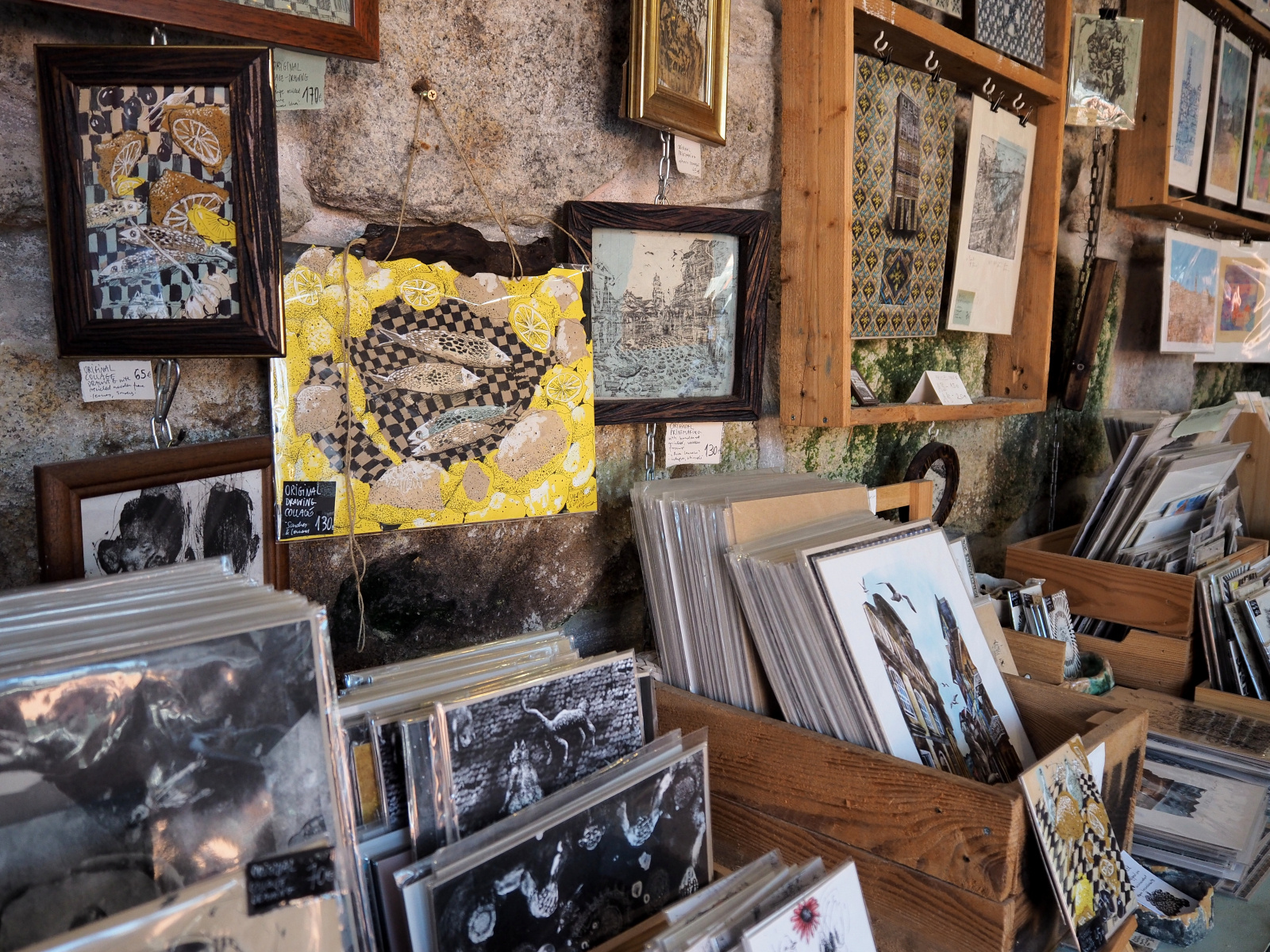
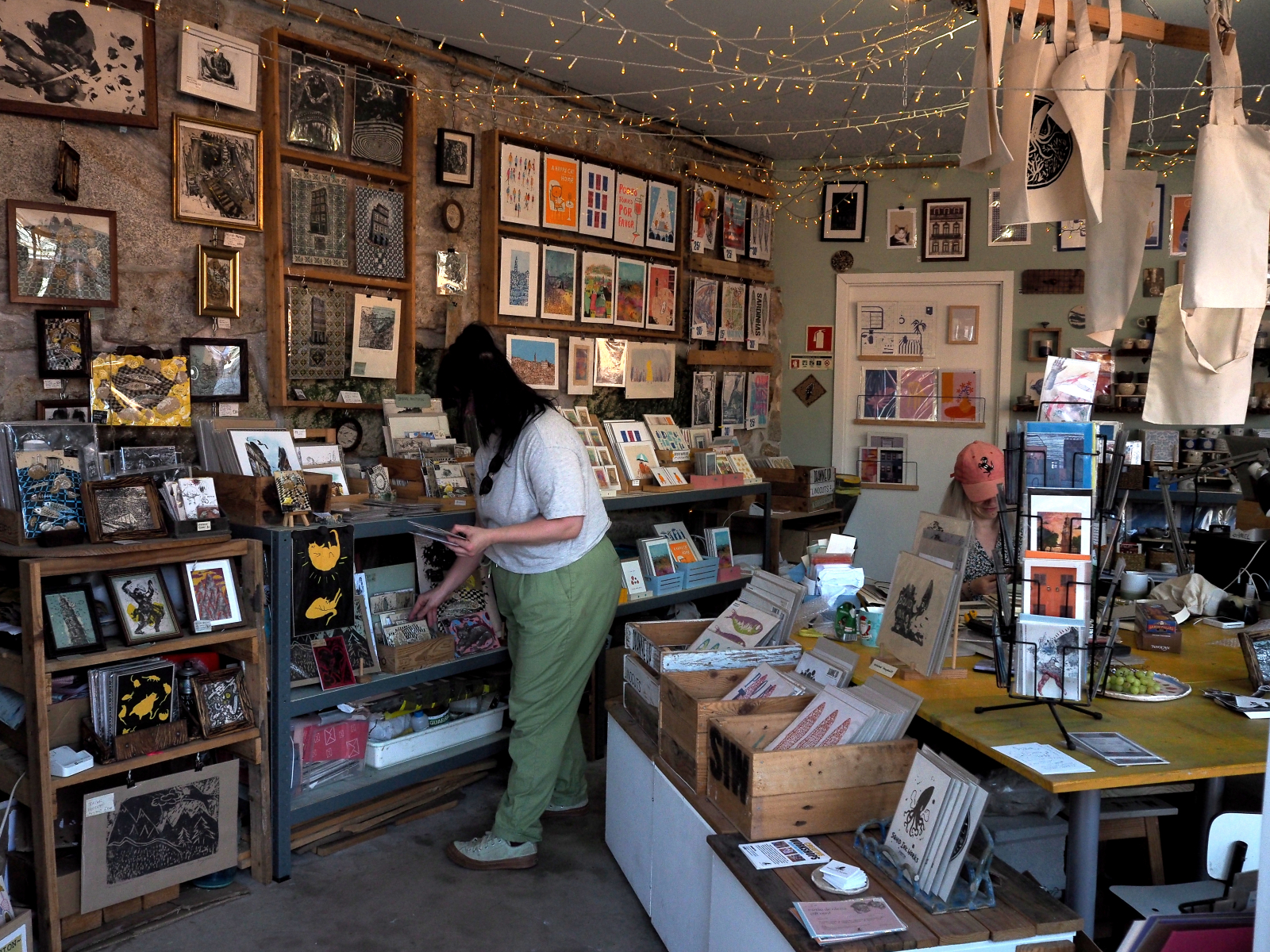
KH: At first, I had plans to draw street portraits and so on, but nothing came of it—too much stress. Of course, I was constantly drawing, sketching, and planning projects in my head. But for the first year or two, working full-time, I had no time at all and didn’t even have access to a print studio! I felt as though I was in a depression; I missed it so much I wanted to cry all the time. But eventually, with my parents’ help, I bought a small etching press for €200, and things improved immediately (laughs).
From then on, despite work, I tried to keep creating—either working on new projects, brainstorming, or finishing something off. I did it, and still do, continuously, even while working. Since my job is quite repetitive, it allows my mind to wander off elsewhere.
The beginnings weren’t easy, mainly due to financial stress. Running out of money would mean having to return to Poland. Because of that, I always felt strong pressure to work and maintain a stable financial foundation to pay the bills. That sense of security was, and still is, extremely important to me.
As for feeling connected to the language and culture—even when living in Poland, I never felt 100% attached to it. I have a feeling I don’t belong to any specific place, but on the flip side, I feel comfortable everywhere and can adapt anywhere.
I don’t think I’ll ever become fully Portuguese either.
MB: Well, that’s because you’re from Silesia! (laughs)
KH: No, but I mean I’ve never felt a strong sense of belonging to any corner of the world. I’m kind of everywhere and nowhere, floating above the ground. That’s why I think I’ll never fully feel that “Portuguese soul.”
Still, I see a lot of similarities between Poles and the Portuguese.
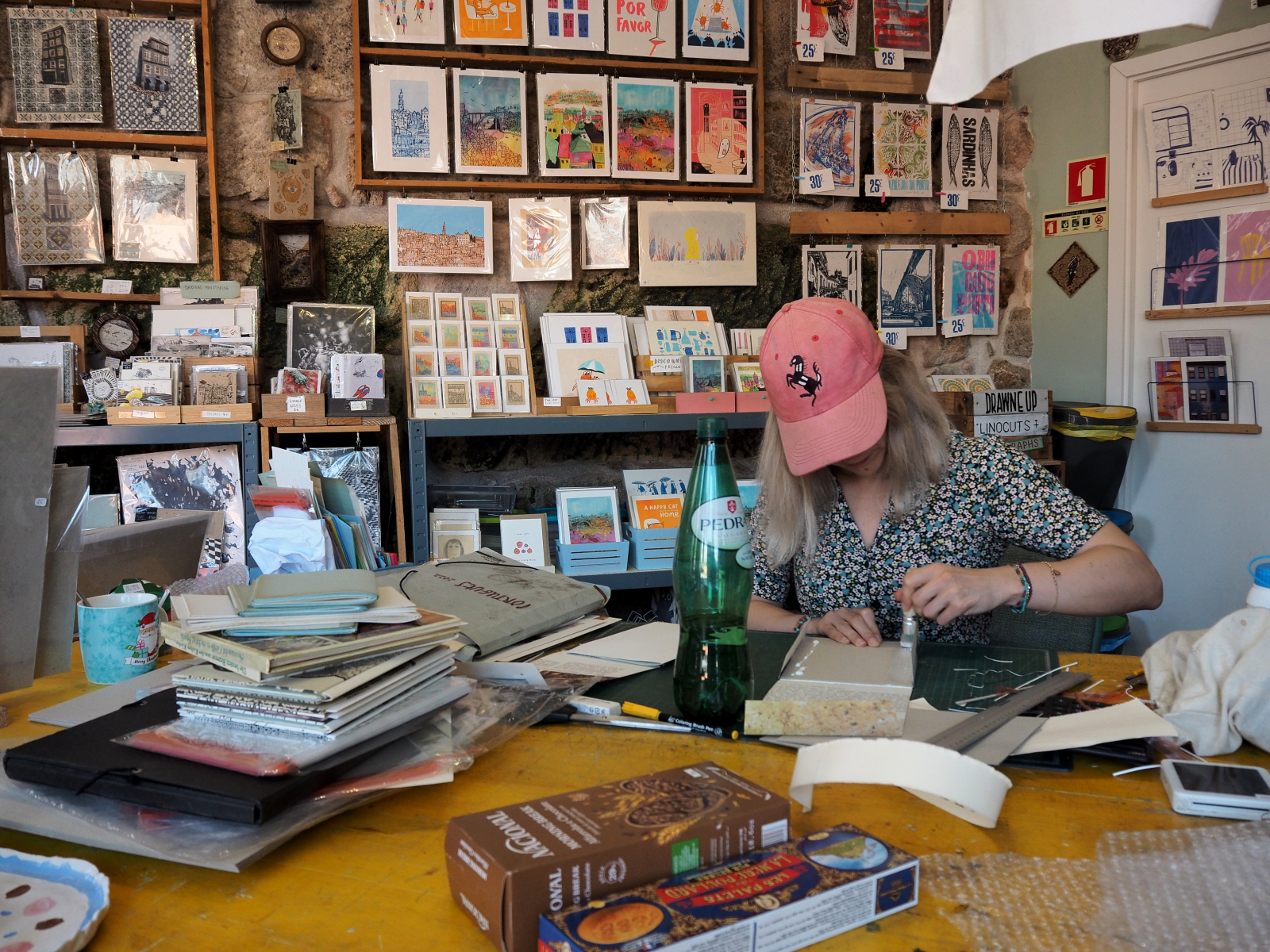
There are quite a few—complaining, for instance (laughs).
KH: You have to complain; why wouldn’t you?
So when did Squid Ink Works enter your lives? How did you end up here?
KH: I got involved a year or two after moving. I had an exhibition of my diploma prints at a restaurant called Nabos da Púcara. Unfortunately, that place no longer exists due to gentrification—we’re all falling victim to it here.
A frequent guest at that restaurant was Marina, the Ukrainian owner of the then newly opened restaurant Terraplana, who had lived in London for years. Marina contacted me, and we organized my exhibition at her place. One day, Andy Winn, the founder of Squid Ink Works, came into Terraplana and mentioned to Marina that he was opening a shop. She immediately texted me: “Get in touch with him, show him your work! He’s looking for artists to showcase.”
I was thrilled, but also terrified. My head immediately told me: “It’ll never work out,” because I completely lacked self-confidence back then.
At first, it operated on a commission basis. I was still working at another restaurant, and Andy simply sold my pieces in his shop and gave me a cut. At the time, he was running it with a girl named Ana. When Ana stepped down, Andy invited me and Marisa Grilo—who had been there from the start—to get more involved and work on-site a few days a week. I had to decline at first because of my full-time restaurant job.
After a while, Andy decided to expand the team and offered permanent collaboration to a larger group. That’s when six of us came together: myself, Andy, Felipe, Marisa, Evandro, and Ana Hoo. That’s how I stayed for good. I’ve been here from the very beginning, since 2018—eight years now.
Some people left, new ones arrived, and in the meantime, the building’s landlord changed. The previous owners—Sharon and Howard, friends of Andy—sold the building to the Lello Foundation.
Andy took us out for a drink and said: “I have two pieces of news.” First, he was leaving. He had been living here with his wife, they had two children, and due to the language barrier and distance from family, he decided to return to York, England. Second, Sharon and Howard were selling the building.
It was incredibly stressful for us. The shop wasn’t just income; above all, it was a fantastic space to show our work. Your art wasn’t sitting in a drawer—it was alive.
Andy reassured us: “Everything will be fine. I talked to the Lello Foundation; they’ll keep you here and you’ll sign a contract, don’t worry.”
Eventually, a representative from the foundation came by. We asked how things would look because we preferred a contract for three years or longer. He said: “You’re better off signing for two years; it’ll be more beneficial for you.” We didn’t have a strong bargaining position, so we agreed, provided there was an option for continuous renewal.
He assured us we’d stay permanently. He talked about how, down the street in an old café, they wanted to build a massive, immersive tourist attraction based on Dante’s Divine Comedy—a staircase leading through different levels of hell, with the café integrated into the whole experience.
But didn’t you mention earlier that there were beautiful mosaics and ornaments inside?
KH: Yes! Those historic decorations were even UNESCO-listed. He claimed that wouldn’t interfere at all—on the contrary, they’d incorporate the decor into the attraction to create something incredible.
(In reality, the building was demolished, and the Lello Foundation bought up additional properties on the street, including a mosque.—Ed.)
What about you, Marta?
MB: I joined Squid only after Andy left, taking over his spot.
What drew you in?
MB: Kasia (laughs) and the need to earn a living. I was doing my PhD, my stipend had ended, I was only teaching one subject at the university—screen printing and relief printing—and I simply had no money to live on. I had to moonlight in a restaurant. Kasia let me know Andy was vacating his space.
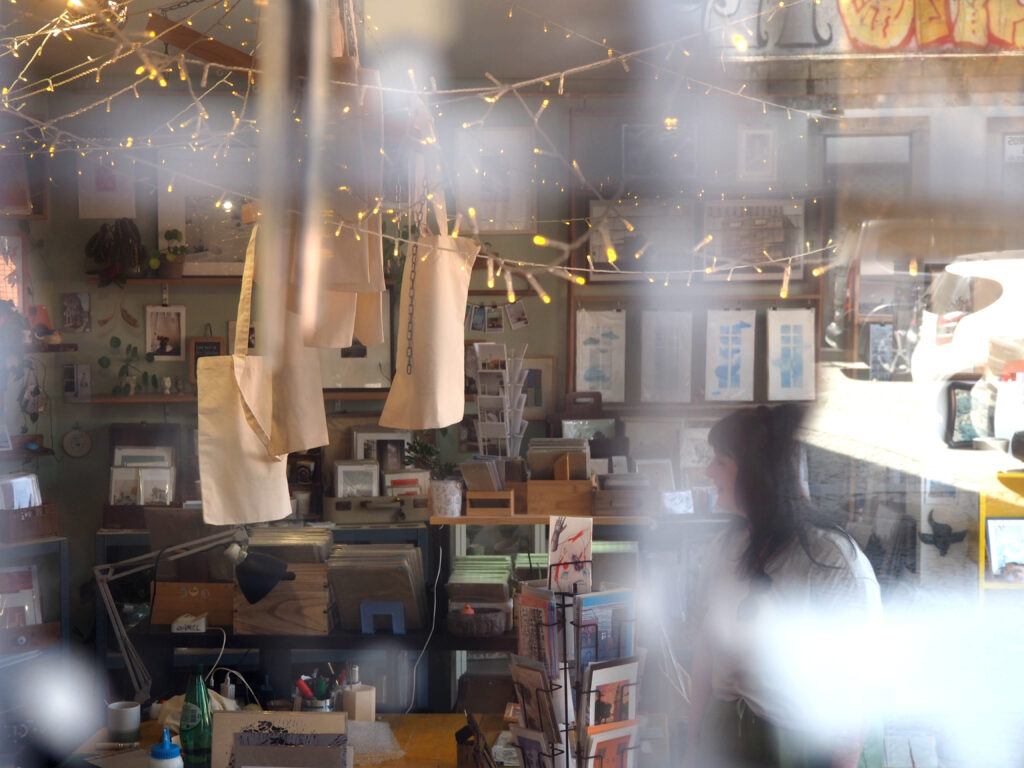
Squid slows down in winter, so you don’t make big money then, but it offers huge freedom. You can sit here, create, the atmosphere is stress-free, and you get to meet amazing people from all over the world. Those encounters are invaluable to me.
And I suppose you found inspiration here too? Being surrounded by work from other members of the collective must be motivating.
MB: Absolutely! It really gets you going. Personally, I like Kasia’s work the most! (laughs)
Let’s return for a moment to gentrification and your current situation at Squid.
KH: After two years, we received a letter from them saying the contract had expired, they were ending our collaboration, and we had to pack up. Fortunately, a lawyer friend who knows tenant law inside out helped us. He reviewed the documents and explained that their actions were illegal. By law, such a lease automatically lasts at least five years. Thanks to that, we gained the right to stay for a few more years.
So the situation is under control! (laughs)
KH: Exactly. That two-year contract expired, so formally we’re operating without a new one, but we pay rent regularly every month. We’re still here, and we’ll see how long it lasts. If necessary, we’re ready to defend ourselves legally.
Understood, but are you looking for a new space anyway?
KH: Yes, of course. We’re aware of the situation and looking for a new location in parallel.
MB: Moving is inevitable because the whole street is gradually turning into a typical tourist trap.
KH: Yes, though there are funny moments too. For instance, a local tour guide comes by who openly criticizes gentrification. During his tours, he shouts at tourists (laughs) and dictates where they aren’t allowed to go. Instead of taking them to the TimeOut Market, he brings them to Bar Portista, where wine costs sixty cents, supporting local businesses instead.
A lot of traditional restaurants have simply closed down. Owners were offered huge sums by investors and accepted. If someone is in a tough spot or elderly and just lacks the energy to work, it’s an offer they can’t refuse. People often don’t think about what will happen to the city after they leave. The result is that the city centre and Ribeira are full of premises with rents starting from €3,000 upwards.
From your perspective, how is Porto changing under the impact of tourism, and how do visitors react to your space?
KH: You know, Andy brought this concept from the UK. He told me that’s how it works there: you divide a space into smaller areas, everyone pays for their piece, and whatever you make from your art is yours. He ran workshops and knew the business had to be open to tourists.
Tourists themselves aren’t a problem or a plague—we travel and become tourists elsewhere too. We’re thrilled when people visit us. What worries us is what big corporations are doing to the city.
When I first arrived, Porto felt almost like the edge of the world—an amazing blend of Europe and Latin America. Small esoteric shops were everywhere, and you could feel an atmosphere of magic realism. Over time, people with big capital spotted the business opportunity and, unfortunately, began homogenizing everything.
Visitors often tell us: “Wow, we finally found a real gem!” They walk down the main streets first and can’t find anything original because all the souvenirs are identical.
Tell us a bit about the changes in the city you’ve witnessed over the years. What surprised you?
MB: We arrived on Erasmus in 2014—twelve years ago! Porto was a huge surprise to me back then. We lived in Bonfim, which had an incredible charm. There were abandoned buildings on every street, but there was a feeling of total ease—nothing had to be polished to perfection.
What enchanted me most were the old, run down cafés. Hideous, but so much so that they were beautiful! With old fridges, traditional tiles, and astonishingly low prices—a coffee and a buttered roll cost literally one euro. In Poland, I would never go out to a café just for a buttered roll; I’d feel I was overpaying. But here, popping into a local bar was a natural part of the day.
We were also surprised by people’s mindset. In Poland, our generation felt intense pressure: finish university, get a job, buy a car, take out a mortgage, and start a family. We moved here and saw a completely different vibe among the locals. Nobody thought about buying flats; everyone lived from hand to mouth without that Polish rush. Whole days were spent in cafés having unhurried conversations. It was amazing—pure living for the sake of living and enjoying the moment.
Naturally, that has changed a lot over time; the Porto of years ago had a completely different rhythm than today.
KH: I also really liked that social life in Porto wasn’t reserved just for young people. People of all ages meet in squares and cafés instead of staying home like in Poland.
MB: Oh, and one more thing that completely shocked me at first! It was our first week in Porto. We were riding the bus, and suddenly I noticed everyone was talking to each other. I thought: “Jesus, do they all know each other or what?!” (laughs)
It turned out they didn’t know each other at all. Over time, I came to understand it. People here just naturally strike up conversations with strangers.
Another thing that was horribly difficult for me to accept and get used to—though now I see it’s quite charming—was grocery shopping. You’re standing in line for literally two items, and the shopkeeper in front of you is chatting with a customer: “How are you? How’s your leg doing?” And you stand there for half an hour because nobody is in a rush.
How would you compare the approach to life here versus Poland?
MB: You can see the difference even at the university. The building itself is in very poor condition—they’re constantly renovating it, and there’s simply no money for materials. It’s poorer, so we constantly have to improvise and find workarounds for things we can’t buy.
But limitations breed creativity…
MB: Exactly! And that applies not just to the university, but to how people approach the world in general. The Portuguese take great care of old things. They have extraordinary respect for tradition, natural materials, and good food. They don’t have that mindless urge to chase after the rest of Europe and give everything a high-end, sterile polish—partly because there’s a lack of capital here.
In Poland, when you renovate, you usually gut everything to zero and buy new things. It doesn’t work like that here. Sure, I’m generalizing heavily now, but you can really feel that in Portugal there is still a very strong, authentic connection to the past and their own culture.
Could you share your perspective on making art in Porto, or in Portugal generally? What is life like for you here as female artists?
KH: To be honest, I feel a bit outside the mainstream art scene. To belong to it, you need great PR, know how to push yourself forward, and simply want to participate in it. That was never my goal. However, I do notice—as I suppose happens worldwide—that men still dominate big group exhibitions and the mainstream circuit. Interestingly, at fine arts academies, both in Katowice and here in Porto, the majority of students are women. Yet it’s mostly men who end up becoming professors.
MB: It also depends on how we define the “art world.” When it comes to projects or decision-making in teams, men sometimes like to have the last word, which I really dislike and find unfair. But the big, commercial world of contemporary art is simply very draining and tough. I prefer putting my energy into something authentic.
On the other hand, if you look at printmaking—the discipline closest to my heart, which I also teach at the university—the situation is different. In Portugal, printmaking is mostly created and taught by women: Graciela Machado, Joana Pereira, Manuela Cristóvão, Célia Bragança, Ana João Romana, and myself. In my daily environment, I don’t feel gender discrimination at all.
Do you still have any contact with the art scene in Poland?
MB: Yes, mainly through the university. It’s not constant contact, but we collaborate on various events. Recently, we both took part in a major international print exhibition, Frontispiece Precipice, at the Marquês da Silva Foundation in Porto. Our friend Kamil Kocurek came over from Poland for it; we had studied together over a decade ago, so it was a wonderful reunion after all those years.
A few years ago, I also helped organize workshops with Professor Graciela Machado at our Academy of Fine Arts in Katowice. Before that, my relief printing professor, Sybilla Skałuba, along with her assistant Iza Łęska, flew over for workshops. So those relationships—mainly with people from academia—remain active in the background.
How well-known is Polish art in Portugal? Do locals recognize Polish creators?
MB: People connected to the art world definitely know the major names. I remember during our studies at the academy here, we had fantastic performance art classes with Paulo Almeida. In Poland, the approach to performance was very academic, whereas here, from day one, we were sliding down the stairs on sheets of paper! That really opened our minds and helped me later with my diploma. Paulo talked to us a lot back then about Polish performance artists and critical art.
KH: As for general awareness: theater classics like Grotowski or Kantor are well known because they are global brands. Among visual artists, names like Mirosław Bałka, Roman Opałka, and Krzysztof Wodiczko pop up, and in literature, Olga Tokarczuk is read by many of our friends.
However, the average person who isn’t involved in art on a daily basis rarely recognizes names—regardless of whether the artist is from Poland or anywhere else.
MB: Spaces like our Squid help break down those barriers. When customers buy work from us, they often ask who made it. That gives us a chance to talk, share our stories, and talk about Poland. In that way, we build very direct, personal connections with people from all over the world.
Conversations on the Edge of Europe is a series of intimate talks with Poles who have chosen Portugal as their new home. They say people come here for a moment and stay forever — but we are interested in what unfolds between the initial enchantment and the reality of the next day. We step behind the postcard views and tourist brochures to ask about cultural collisions, learning the language, the bumpy roads to assimilation, and the quiet art of preserving one's identity.
This is a space to explore the bittersweet reality of moving abroad — navigating change, gentrification, professional hurdles, and the search for peace. Above all, it is about how emigration slowly and irreversibly reshapes our perception of people, as well as concepts such as home, freedom, and time.